Before owning any Bitcoin, you need somewhere to store them. That place is called a “wallet”. A “wallet” is basically the equivalent of a bank account. It allows you to receive Bitcoins and other coins, store them and the send them to others.
Types of Bitcoin & Crypto Wallets
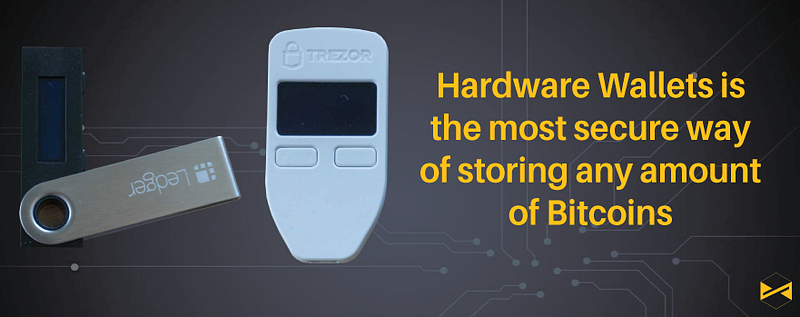
Hardware Wallets
A Hardware wallet is a physical electronic device, built for the sole purpose of securing Crypto coins. Hardware wallets are a good choice if you’re serious about security of your Bitcoin and Crypto Storage.
Hardware wallets keep private keys separate from internet connected devices. Your important private keys are maintained in a secure offline environment on the hardware wallet.
Generating and storing private keys offline using hardware wallets ensures that hackers have no way to reach your coins
Major advantages over standard hardware wallets:
1. Private keys aren’t exposed to your computer
2.· Hardware wallets cannot receive computer viruses or malware
3.· You must have the hardware to confirm a transaction, preventing remote hacking
4.Most hardware wallets are encrypted with a PIN or other security feature
5.If you lose your hardware wallet, you can still recover your coins
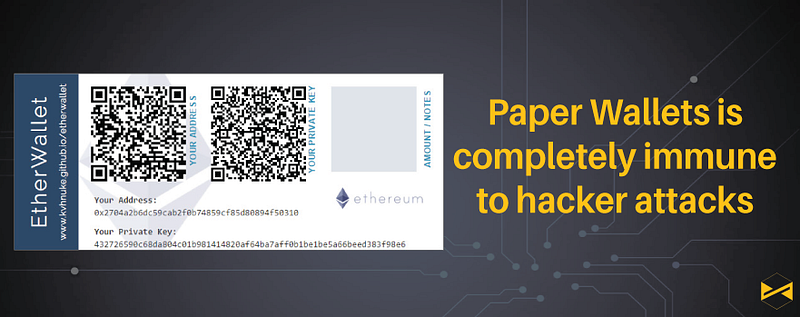
Paper Wallets
A Paper wallet is essentially a document which contains a public address that can be used to receive Bitcoins and private key, which allows you to spend or transfer bitcoins stored at that address. Those are often printed in a form of QR codes so that you can quickly scan them and add to your software wallet to make transactions.
Major advantages of paper wallet :
1. Paper wallet is that key which are not stored digitally anywhere, which makes it completely immune to hacker attacks.
2. Before generating a paper wallet you need to make sure that no one is watching you do it. To rule out the risk of any spyware monitoring your activities, it is recommended to use a clean operating system.
3. The keys are printed in the form of QR codes which you can scan in the future for all your transactions.
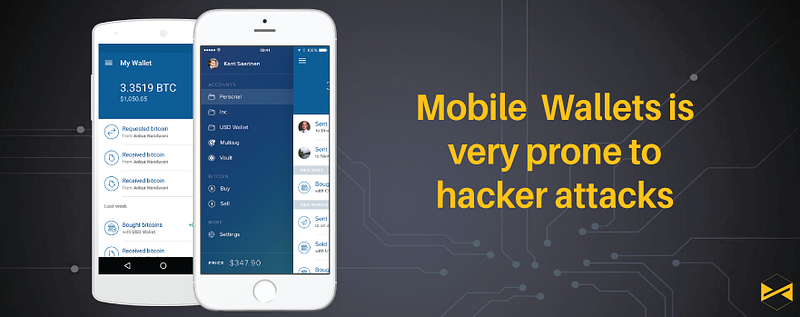
Mobile Wallet
Mobile wallets run on an app on your phone and are useful because they can be used anywhere including retail stores. Some wallets have additional features such as QR code scanning or the use of near-field communication technology. Despite being a convenient on-the-go solution for Bitcoin storage, mobile wallets are very prone to hacker attacks. Moreover, you can lose control of your wallet if someone simply gains access to your mobile device. There’s a big variety of Bitcoin wallet apps for devices running on Android. Apple banned Bitcoin wallets from the AppStore in February 2014, but reversed its decision several months later.
1. Your wallet could be hacked, especially if your phone is consistently connected to the internet
2. If someone steals your phone, they could access your wallet
3. Regular back-ups are required to prevent the above from occurring
4. Mobile wallets are usually much smaller and simpler than desktop wallets because of the limited space available on a mobile.
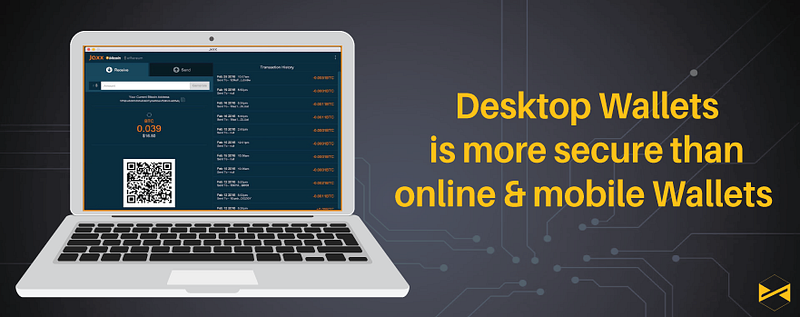
Desktop Wallet
Desktop wallets are downloaded and installed on a PC or Laptop. They are only accessible from the single computer in which they are downloaded. Desktop wallet is more secure than online and mobile wallet. They don’t rely on third parties for their data and are harder to steal. They are still connected to the internet, which makes them inherently insecure. However, desktop wallets are a great solution for those trading small amount of Bitcoin from their computers.
1. Desktops wallets offer one of the highest levels of security however if your computer is hacked or gets a virus there is the possibility that you may lose all your funds
2. Easy to install and maintain , most are available for Windows, Linux and Mac, although there are some limited to a particular OS.


nice one
ReplyDeletegood info
ReplyDeletegreat information
ReplyDeletegood one
ReplyDelete