Monday, April 29, 2019

A BEGINNER’S GUIDE TO MINING ETHEREUM — WHAT YOU SHOULD KNOW!| Paro Exchange

Ethereum (ETH) is the second most valuable virtual currency in the market right after Bitcoin. In order to process transactions and verify that everything woks properly in the network, miners need to provide their power to the network. After it, miners receive compensation in ETH for their work. In this way it is possible to keep the network secure and smoothly.
To put it simply, crypto-currency mining is a process of solving complex mathematical problems. Miners are essentially the cornerstone of any crypto-currency network as they spend their time and computing power to solve those problems, providing a so-called “proof of work” for the network, which verifies ether transactions. Besides that, miners are responsible for creating a new Ether tokens through this process, as they receive rewards in Ether for successfully completing a proof of word task.
As more and more miners join in, the problem automatically become more difficult to solve, which means more time and computational power is required to solve them and the rewards become smaller. Many people see mining as an ideological incentive, a mean of directly supporting the network.

How to Mine Ethereum?

In order to start mining Ethereum it will be necessary to have a special computer hardware that will be dedicated full time to mine ETH. It is possible to use GPU and start processing transactions. It is not easy to set up one of these devices, and is not so straightforward to decide which miner to use.
The best thing to do is to set up a mining rig, that will give you the best hash rate at the lowest possible price. Buying a mining rig means that you will have multiple GPU’s working together to extract as many coins as possible.
If you want to know the profits you will have, you can enter the hash rate and the price you pay for electricity. The calculator will later show you the amount of Ether you will receive per hours/day/month/year.
One of the most important programs is known as “GETH” that runs an Ethereum node that is written using the programming language knows as Go. If everything is installed properly, you will be connected to the network and you will have an interface for deploying smart contracts and sending transactions.
source: Coin Revolution

Joining a mining pool

As a miner, you’re unlikely to be able to mine ether on your own.
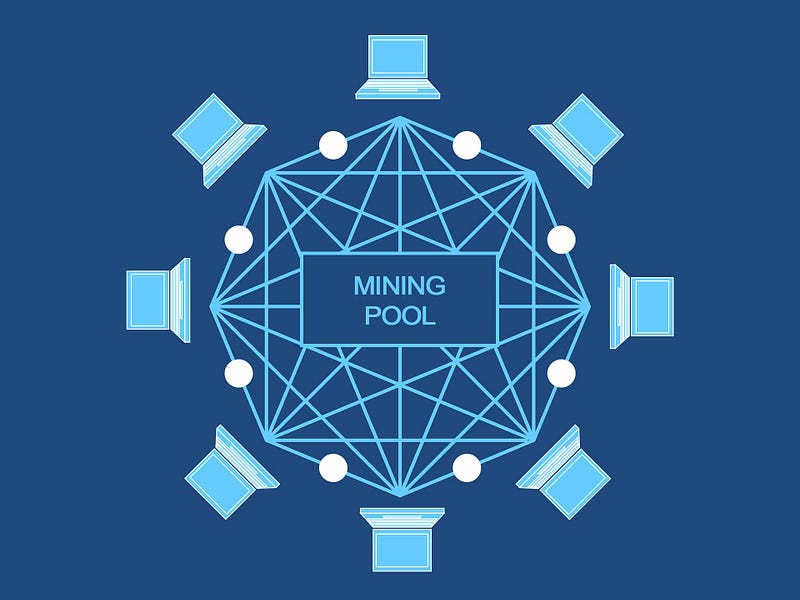
That’s why miners pool together their computational power into “mining pool”, to improve their chance of solving the cryptographic puzzles and earning ether. Then, they split the profits proportional to how much power each miner contributed.
There are many factors involved in joining a mining pool. Each pool might not be around forever, and the computational power of each pool is constantly changing, so there are a number of factors that go into deciding which to join. One point to keep in mind is that mining pool have different pay-out structures.
Mining pools will have some sort of a signup process on the website so that miner’s can connect to the pool and begin mining.

Sunday, April 28, 2019

What is RIPPLE Paro Exchange

Ripple is a real time gross settlement system, currency exchange and remittance network created by Ripple Labs Inc., US based technology company. Released in 2012, Ripple is built upon a distributed open source protocol, and supports token representing fiat currency, crypto currency or other units of value. Ripple purports to enable “ secure, instantly and nearly free global financial transactions of any size with no charge backs.
Ripple was conceived by Jed McCaleb and built by Arthur Britto and David Schwartz who then approached Ryan Fugger who had debuted in 2005 as a financial service to provide secure payment options to members of an online community via a global network. Fugger had developed a system called Open Coin which would transform into Ripple. The company also created its own form of digital currency referred to as XRP in a Manner similar to Bitcoin, using the currency to allow financial institutions to transfer money with negligible fees and wait-time.
Ripple Labs continue as the primary contributors of code to the consensus verification system behind Ripple, which can “ integrate with banks” existing network. The protocol has been adopted by an increasing number of financial institutions to an alternative remittance options to consumer.

How is it Fundamentally Different From Bitcoin?

It is the validating servers and consensus mechanism that tends to lead people to just assume that ripple is a blockchain- based technology. While it is consensus oriented, Ripple is not a blockchain. Ripple uses Hash Tree to summarize the data into a single value that is compared across its validating servers to provide consensus.
Bank seems to like Ripple, and payment providers are coming on board more and more. It is built for enterprises and, while it can be used person to person, that really isn’t its primary focus. The main purpose of the ripple platform is to move lots of money around the world as rapidly as possible.
Ripple’s token, XRP isn’t mined like Bitcoin, Ethereum, Litecoin and many other cryptocurrencies. Instead, it was issued at its inception, similar in fashion to the way a company issues stocks when it incorporates

What is Ripple’s Value Propositions?

The value here is the Ripple network itself and its ability to move assets around the world quickly, rather than in the XRP token.
Banks are able to use the Ripple software to shift money between different foreign currencies. Currently, this is typically accomplished using Swift, a system that is cumbersome and relies on the banks having separate accounts in every country they work in. Ripple says its has signed up more than 100 banks including American Express.


Friday, April 26, 2019

What is Blockchain | Paroexchange

A blockchain is a public ledger of information collected through a network that sits on top of the internet”
Blockchain technology is not a company, nor is it an app, but rather an entirely new way of documenting data on internet. Blockchain technology is commonly associated with Bitcoin and other Crypto currencies.
While block chain isn’t simple when you dig into the nitty-gritty, the basic idea isn’t too hard to follow. It’s effectively a database that’s validated by a wider community, rather than a central authority. It’s a collection of records that a crowd oversees and maintains, rather than relying on a single entity, like a bank or government, which most likely hosts data on a particular server. A physical database kept on paper could never be managed by tens of thousands of peers, but that’s where computers, and the internet, come in.
The entire blockchain is retained on this large network of computers, meaning that no one person has control over its history. That’s an important component, because it certifies everything that has happened in the chain prior, and it means that no one person can go back and change thingsIt makes the blockchain a public ledger that cannot be easily tampered with, giving it a built-in layer of protection that isn’t possible with a standard, centralized database of information.
How Does Blockchain Work?
How does the blockchain work? Let’s recall a few key features before we get into the details:
1. Blockchain keeps a record of all data exchanges — this record is referred to as a “ledger” in the crypto currency world, and each data exchange is a “transaction“. Every verified transaction is added to the ledger as a “block
2. It utilizes a distributed system to verify each transaction — a peer-to-peer network of nodes
3. Once signed and verified, the new transaction is added to the blockchain and cannot be altered

What is Cryptocurrency Paroexchange

A cryptocurrency is a digital or virtual currency that uses cryptography for security. A cryptocurrency is difficult to counterfeit because of security feature. Many cryptocurrencies are decentralized system based on blockchain technology.
The first blockchain based cryptocurrency was Bitcoin, which still remains the most popular and most valuable. There are thousands of alternate’s cryptocurencies with various functions or specifications.
Cryptocurrencies are systems that allows for the secure payments of online transactions that are denominated in terms of a virtual token. The first cryptocurrency to capture the public attention was “Bitcoin” which was launched in 2009 by a group or a person named Satoshi Nakamoto. Bitcoin’s success has created a number of competing cryptocurrencies such as Litecoin , Ethereum , Ripple and many more, Today, there are literally thousands of cryptocurrencies in existence.
Cryptocurrencies hold the promise of making it easier to transfer funds directly between two parties in a transaction, without the need for a trusted third party such as a bank. In modern cryptocurrency systems, a user’s “wallet”or account address , has the public key and private key is used to sign transactions. Funds transfers are done with minimal processing fees.
Cryptocurrencies’ Blockchains are secure, but other aspects of a cryptocurrency ecosystem are not immune to the threat of hacking. In Bitcoin’s 10-year history, several online exchanges have been the subject of hacking and theft, sometimes with millions of dollars worth of ‘coins’ stolen. Still, many observers look at cryptocurrencies as hope that a currency can exist that preserves value, facilitates exchange, is more transportable than hard metals, and is outside the influence of central banks and governments

what is margin trading & what is buying on margin

Margin Trade With margin trading, you can buy a big lot of shares despite not having enough funds to afford the same by borrowing t...